Monday, July 4, 2016

This Fourth of July...

This Fourth of July...


240 years ago on this day, the Declaration of Independence was adopted, granting birth to the United States of America. As we Americans celebrate this fact, there are some unspoken concerns that we must taken into consideration. This Fourth of July, for the sake of veterans, animals, human safety, and the environment, we should refrain from illegally using fireworks at home. An alternate option that will ensure minimum threat is attending a fireworks display conducted by professionals. But, the best option is to forgo fireworks altogether, and to instead opt for eco-friendly alternatives that do not pose a huge threat to human/animal health and the environment.


Why we should be considerate about using fireworks this Fourth of July:


1. Veterans: Veterans who served in combat often suffer from PTSD, or post-traumatic stress disorder. The loud sounds and bright lights resulting from fireworks severely affect combat veterans suffering from PTSD, as veterans assume the fireworks are gunshots or explosions. Fireworks can trigger PTSD symptoms in combat veterans.


2. Animals: Animals, especially our pet dogs and cats, have keen senses of hearing, meaning they are much more vulnerable to the loud noises created by fireworks. Our pets are very likely to run away in an attempt of finding escape away from the noise of fireworks. Not only do some pets run away, but they are also unfortunately likely to get hit by a car. Wild animals are at great risk of being affected by fireworks as well. Feelings of fear, stress, and anxiety develop in wild animals following exposure to fireworks. Wildlife moms tend to abandon their babies and become too disoriented to find their way back to their babies. Meanwhile, the babies die as a result of the absence of their mothers to take care of and nurture them. In addition, fireworks may startle and disorientate birds, causing them to fly into windows and buildings, and possibly suffer from injury or even death. Scavenging animals may ingest firework debris, putting them at a large risk of death. Here is a complete list of the effects fireworks have on animals, both wild and domestic: https://www.causes.com/causes/121564-against-fireworks-in-lebanon/updates/491597-fireworks-harm-and-kill-animals


3.  Human Safety: Around 4th of July, firework-related injuries drastically increase. When used irresponsibly, fireworks can cause severe burns and injuries to eyes, ears, arms, and legs. The United States Consumer Product Safety Commission reported that around 4th of July, 230 people on average go to the emergency room to treat firework injuries. Children are especially at risk if they are unattended. Here is a list of safety tips: http://www.cpsc.gov/en/Safety-Education/Safety-Education-Centers/Fireworks/


4. Environment (and Health)  Fireworks have a detrimental effect on the environment, all of which are promoted by means of manufacturing, transporting, and combusting.
  • Manufacturing: In order to create fireworks, raw materials and energy are used. The elements that make up fireworks are obtained through mining, which in itself is dangerous to the environment. Much of the mining actually occurs in the mountains, removing habitats and consequently threatening wildlife.  
  • Transporting: Once fireworks are produced, they are transported around the world to reach consumers. This transportation may occur through planes, trucks, and boats, all of which produce greenhouse gases that increase air pollution.
  • Combusting: When fireworks are combusted, toxic chemicals and pollutants are released that not only affect human health, but the environment as well. Smoke from fireworks contains particulate matter and pollutants. Such pollutants that are released by fireworks are ozone, sulfur dioxide, nitric oxide, and carbon dioxide. These pollutants are widely known to contribute to air pollution and have adverse effects on human health. In addition, when fireworks fallout, bodies of water may become contaminated. Lakes, rivers, and oceans as a result may become polluted. Here is a complete list of the effects caused firework components as provided by backcountryattitude.com :


The Toxic Elements of Fireworks - Pick Your Poison

Toxic Element
Fireworks Usage
Toxic Effect of Fallout Dust and Fumes
Aluminum
brilliant whites
Contact dermatitis, bioaccumulation
Antimony sulfide
glitter effects
Toxic smoke, possible carcinogen
Arsenic compounds
Used as colorants. Sadly still out there. [3]
Toxic ash can cause lung cancer, skin irritation and wart formation.
Barium Nitrate
glittering greens
Poisonous. Fumes can irritate respiratory tract. Possible radioactive fallout. [4]
Copper compounds
blues
Polychlorinated dioxins and dibenzofurans. [5] Can bioaccumulate. Cancer risk.
Hexachlorobenzene (HCB) [5]
Use was supposed to be banned globally.
Persistent environmental toxin. Is a carcinogen, mutagen and a reproductive hazard [13].
Lead Dioxide / Nitrate / Chloride
oxidizer
Bioaccumulation, developmental danger for kids & unborn babes, may remain airborne for days, poisonous to plants & animals
Lithium compounds
blazing reds
Toxic and irritating fumes when burned
Mercury (Mercurous chloride)
chlorine donor
Toxic heavy metal. Can bioaccumulate.
Nitric oxide
fireworks byproduct [6]
Toxic by inhalation. Is a free radical
Nitrogen dioxide
fireworks byproduct [6]
Highly toxic by inhalation. SIDS risk [8].
Ozone
fireworks byproduct [7]
Greenhouse gas that attacks & irritates lungs
Perchlorate -
Ammonium & Potassium
propellant / oxidizer
Can contaminate ground & surface waters, can cause thyroid problems in humans & animals
Potassium Nitrate
in black powder
Toxic dusts, carcinogenic sulfur-coal compounds
Strontium compounds
blazing reds
Can replace calcium in body. Strontium chloride is slightly toxic.
Sulfur Dioxide
gaseous byproduct of sulfur combustion
Acid rain from sulphuric acid affects water sources, vegetation & causes property damage. SIDS risk [8].


Alternatives:
We all want to have an enjoyable 4th of July, preferably without fireworks. So here is a list of alternate activities you and your family can enjoy without disturbing veterans, harming wildlife, threatening human safety, or destroying the environment.

  • Attend a laser light show, parade, or block party.
  • Camp out and observe the natural beauty of the night sky.
  • Blow glow-in-the-dark bubbles or pop confetti poppers

Wednesday, June 22, 2016

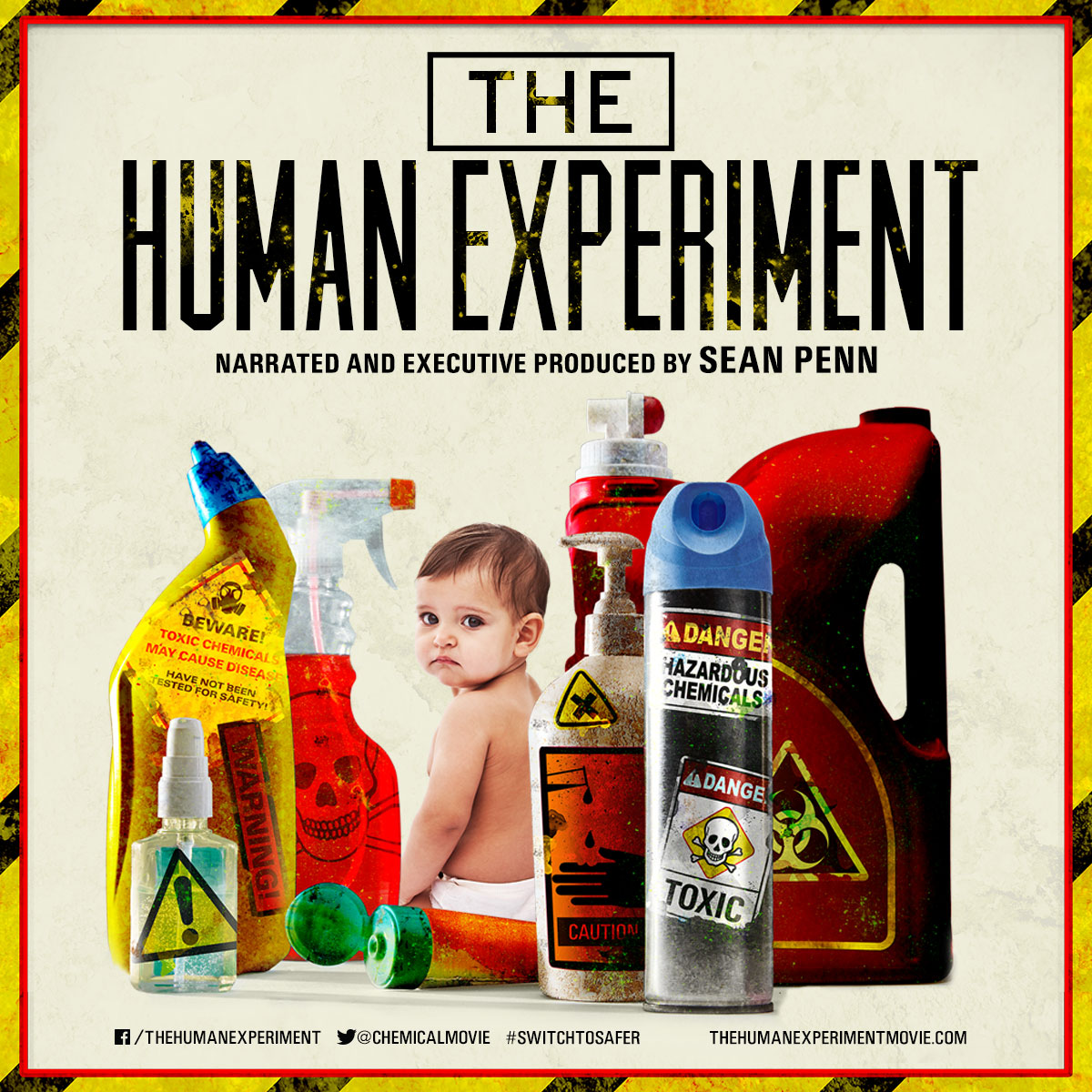
#2. The Human Experiment

The Human Experiment
(Directed by Dana Nachman and Don Hardy)
(Post by Priscilla Velez)

The Human Experiment.jpg


Chemicals are basically everywhere- they line our plastic bottles, children's toys, furniture, and personal care and beauty products. What’s even scarier about the excessive amount of chemicals that surround our lives is the fact that a majority of these chemicals have not yet been tested for safety, but are still placed onto the shelves of stores in which they are of easy access to clueless consumers.
The Human Experiment is a documentary that covers this prominency of chemicals in our everyday lives. The documentary focuses on stories of individuals themselves who have been affected by chemicals in some way and also focuses on the increasingly difficult battle in taking action against the large chemical companies.
Several medical cases influenced by toxic chemicals found in everyday products are shown throughout the film: a couple who experienced trouble in conceiving and carrying a baby to full term, a healthy-as-can-be athlete who was diagnosed with breast cancer, and a young boy who developed autism. Placed together with these medical cases are unbelievable scary facts about recent exponential increases in illnesses and diseases without probable explanation (which is assumed to be due to chemicals):
  • Since 1975, cancer rates have gone up 30% in both men and women
  • Since 1988, there has been a 49% increase in couples having trouble conceiving and carrying to term
  • In 1999, 1 in 500 kids had autism. As of 2013, 1 in 88 kids has autism.
  • Other increases include: childhood brain cancer, asthma, leukemia, ADHD, early onset puberty, and life-threatening birth defects.

Throughout the documentary, it is clear and apparent the detrimental effect chemicals have on the health and lives of consumers. Scientists and researchers from highly-respected institutions do not hesitate to admit this occurrence. I however, want to focus on a shameful practice that should be brought to attention; one that emphasizes the greed and criminality of corporations and one that could be viewed as a lesson to be applied to environmental action.
In the United States, there is no official law that requires companies to test the chemicals they use in their products prior to marketing them. This means that companies could use chemicals that are carcinogens and/or affect the human on multiple scales including neurological, hormonal, and reproductive (which often is the case) and not have any obligation whatsoever in disclosing any information about the chemicals to potential consumers. The end result is a mass production of dangerous and potentially lethal products that are readily available to consumers. Consumers, in which, put their trust in companies and assume that these products must be safe since they are allowed to be sold. Even worse, consumers use these products and must unknowingly face the dangerous consequences whilst companies happily count their profit.
Companies love the non-existence of a law that would otherwise require them to test their chemicals and possibly hinder the creation of certain products or force them to find alternatives. In fact, companies love the non-existence of law that requires them to test chemicals so much that they do all they can, especially spending millions, to ensure that such a law is never created. Large billionaire companies have repeatedly shut down efforts to establish chemical-testing laws, most efforts in which are organized by politicians, environmentalists, doctors, and activists.
Not only do these companies shut down efforts, but they also make it a routine practice to constantly misinform the public about the safety of their products using deception, distraction, and strategic marketing.
What made me especially fond and liking of this documentary was not only the fact that it truly helped me realize the large scale in which chemicals are threatening our health, but also the fact that it helped me further realize just how destructing and monstrous companies are. As I have mentioned on my blog before, companies have always only cared about making profit, even if it means at the expense of the environment and health and lives of organisms, including human beings. These companies have consistently disregarded ethics and morals because they have allowed capitalistic thinking and ego to get the worst of them.
The thought of this just disgusts me beyond words. It is important, if not CRUCIAL, that we bring ourselves to a state of conscious awakening, and take serious note of the fact that these companies are our worst enemies. These companies, along with money and economy in general, are largely responsible for almost everything that is wrong with the environment or human health. I just truly hope that people divert away from wanting to contribute to such greedy practices and instead partake in activist efforts.

Call to action: Elect government officials who you are certain will advocate for what’s important and exempt from the corruption and greed of companies. Become educated and informed on issues like the chemical industry and raise awareness. Most importantly, do all you can to make a change.

Tuesday, June 21, 2016

Something to Think About

Today I read an article from Collective Evolution regarding a Harvard study that explains why bees are disappearing- insecticides known as neonicotinoids. The article finished with this short, yet brilliant paragraph that captures the misconceptions humans have between money/economy and the environment.

"As we continue to take actions like this we continue to see that how we are currently doing things simply cannot be sustained. This type of issue does not just reflect how we treat nature but also reflects how we operate as a whole. If money wasn’t so important, we wouldn’t be finding unnatural ways to do everything on this planet. If we weren’t so concerned with maintaining an economy, issues such as these wouldn’t affect us. This is all a perfect lesson for us to ask “what the heck are we doing to our planet?” We are at a point where our very survival is now threatened because we are fighting so hard to maintain a system we all don’t like anyway."

    I have never been able to understand why humans have become so absorbed and consumed with the thought of money, so much in fact that our obsession has diverted us away from recognizing the true beauty that constantly surrounds us. Why do we find large amounts of money and materialistic items as being more stimulative and exciting than the vast oceans, beautiful species of plants and animals, large mountains, and lush forests? Not only that, but why has our obsession caused us to neglect the care of Earth? Our dear Earth has made everything possible; we wouldn't be here if it wasn't for the environment. shelter, food, water, and nutrients it provides us with. 
     When it really comes down to everything, you become very aware of the fact that humans' greed and obsession with money is the largest contributor in the destruction of the Earth. Companies desire money so bad that they destroy forests, kill animals, irresponsibly use important and natural resources, and create products full of harmful or deadly chemicals.
      There are a lot of challenges that environmentalists face. Perhaps one of the biggest challenge is getting people to recognize that money is not more important than the environment.
        With that being said, I hope you all realize what important role you have in changing this unfortunate occurrence. Change starts with us.


Discoveries from a trip to the California Science Center

               Just this past week, I visited the California Science Center, a museum concerning science and technology, located in Exposition Park, California. The California Science Center has a large variety of exhibits and demonstrations that make learning about science an interactive and exciting experience. For example, at the Science Center you can expect to learn about the various ecosystems, biological processes, and space technology. If you are a California resident or a Los Angeles resident, I highly recommend visiting the Science Center. Oh, and did I mention that entry into the permanent exhibits is free?!?!
           Although I enjoyed essentially everything pertaining to the Science Center, I found myself particularly fascinated around the information concerning human impact on the environment. One exhibit known as the Global Zone had plentiful of information about Earth being an ecosystem as a whole. A portion of this exhibit included data about the amount of carbon dioxide in the atmosphere.


*Note this legend provided by the California Science Center (courtesy of NASA JPL) that provides information regarding the ppm (parts per million) of carbon dioxide. The purple color refers to 360 ppm of carbon dioxide, whereas the red color refers to a large amount of carbon dioxide, valued at 410 ppm.

With this information given, the viewer of the exhibit is free to see these how exactly these values correspond to different areas on Earth. The viewer is able to scan through different months within the past year and observe how these values change over time.

 When I scanned to April 2016, this is what I saw.


- This is a physical Earth that was placed in the center of the exhibit. This physical version of the Earth showed that for essentially the whole Earth, the ppm value of carbon dioxide was 410, the highest possible value on the scale provided. Scary isn't? Although I didn't take pictures of the previous months, I observed that the value of ppm drastically spiked from about 360 ppm to 410 ppm in April.


- Here is the same data. but provided in a digital form.


Although I myself have been very aware of the fact that industrial processes have largely contributed to the increase of carbon dioxide and other greenhouse gases in the atmosphere, this exhibit helped me further realize just how drastic that increase is. Essentially our whole EARTH, is covered in extremely large amounts of carbon dioxide. The presence of greenhouse gases in our atmosphere poses huge threats to the environment and organism health, and can lead to global warming, acid rain, eutrophication, and ozone depletion. As always, it is crucial that we all ensure to opt for public transportation/walking and limit energy use to prevent the further entry of greenhouse gases into the atmosphere.


     Another exhibit I found something interesting out was the L.A Zone, located in the Ecosystems exhibit. The L.A Zone showed that although Los Angeles is an environment composed of both man-made and natural entities, it still governs the characteristics of an ecosystem. The L.A Zone specifically focused on the difficulties and challenges that humans face in urban areas when it comes to energy, waster, water, and wildlife.
     Now, I didn't get to look that much into this exhibit, but one portion that caught my attention was the landfill portion.


-A glass pillar the height of the room itself was filled up of various landfill components, more specifically plastic. Now, this looks like an excessive amount of plastic right? This amount of plastic doesn't even remotely compare to the amount of plastic that fills landfills, streets, and oceans. Please, remember to limit your use of plastic and recycle!


Here are some other pictures from the landfill portion of the L.A Zone.


All in all, the California Science Center is a great museum to not only learn about science in general, but to fundamentally understand human impact on the environment.

Monday, May 30, 2016

Choosing the Right Presidential Candidate for Environmental Action

I'm furious. It goes without saying that Donald Trump is essentially the most incompetent and inhumane presidential candidate. Despite his lack of knowledge in regards to holding a position in the government, his disgusting and heinous comments against ethnic groups, and overall immaturity, Trump has recently stated that if he were to be given the position of President, he would cut regulation on environmental issues. He even claimed he would “cancel” the Paris Agreement, an agreement between various nations that has a promising start to combating environmental issues in a political manner, and would do his best to conserve coal, one of the many current energy sources that is largely responsible for destroying our environment. How could anyone support this monstrosity? He prioritizes tax reform, an unnecessary wall, and second amendment rights as opposed to the environmental issues and social issues that are tearing our world apart. I can not even begin to fathom how ego-consumed and materialistic you can be to believe that our earth is not in desperate need of saving. Oh, i'm sorry, does money sustain 8.7 million species? Our Earth has made EVERYTHING possible. Screw your concerns about taxes and the economy, the earth is the main concern here. Almost every single thing that makes up our lives has merely been the manifestation of ego and greed. Please tell me how things with such an ill source of creation are more important than our Earth. If you have been willing to read through all this, please vote for Bernie Sanders, a candidate who genuinely cares about REAL issues, such as the environment and corporate corruption.

Sunday, May 1, 2016

Recycling/Sustainable Practices and Programs at Businesses

Hello, once again! I've decided to start yet again another series. This post will concern all varieties of recycling/sustainable practices and programs you can expect to find at businesses. I will update this post as often as I find more programs and such.


  1. Target: To begin with, Target offers reusable bags that are available for purchase at cash registers. If customers decides to choose the reusable plastic bag option, Target offers a program that allows the plastic bags to be returned at a participating Target store (after being washed and cleaned of course). All of Target's personal brands, including Market Pantry and Up & Up include logos on their packaging to assist consumers in understanding whether or not their products are capable of being recycled. Here are some examples:


    These are simple, yet effective ways for consumers to be environmentally-smart about recycling. Here is the very helpful website mentioned on the logos: http://www.how2recycle.info


    This isn't necessarily Target-exclusive, but Target sells recycled aluminum foil!


    2. H&M: H&M recently started this recycling program in which you could bring in old fabrics and clothing for them to recycle and reuse! 


    3. Chipotle: After eating at Chipotle, customers are offered assistance about how they can discard of materials at the trash/recycling bins! The trash/recycling bins are separated into two sections: landfill materials (not pictured in picture) and recycling materials.
    The recycling materials listed are: receipts, tin foil, plastic cups and lids, drink cup lids, cutlery, straws and wrappers, plastic bottles, glass bottles, and bowl lids.

    4. Trader Joe's: Flowers are essentially the go-to gift for a wide range of occasions, ranging from birthdays, graduations, and to anniversaries. However, it is imperative that flowers are both sustainably grown and sourced. Luckily enough, Trader Joes offers flowers that are certified as being sustainably grown and are also certified for being involved in Rainforest Alliance, which is " is a non-governmental organization working to conserve biodiversity and ensure sustainable livelihoods by transforming land-use practices, business practices and consumer behavior". (Wikipedia)


Local Park Cleanup

           Happy Sunday everyone! Let me first start off by saying that since AP Exams and the SAT are extremely close, and considering the end of the school year is very near, I will not be able to post as much as I would like to. The next few weeks will be busy and full of studying. Nonetheless, I will attempt to post as often as I could. I do have a new post I would like to post after this one, I am just awaiting for some materials in order to do it. Lastly, I would like to say that I do have a lot of new goals of this blog, and you can expect to see this blog go in full blast during summer when I have a bunch of free time on my hands!
          Yesterday, on April 30, 2016, a wonderful environmental and social event took place at a local park. Three clubs from my high school hosted a park cleanup at a park in close proximity to our school. The day started with group building activities, as organized and led by one of my high school's very spirited clubs. Participants had to race to finish a relay race, guess words/phrases during a game of charades, and had to steal the opposing teams' flags while entangled in a human knot. After finishing games, participants gathered materials (which were wondrously donated by the park itself) to begin cleaning up the park. We managed to clean an ample amount of trash in addition to gathering  recyclable materials to recycle afterwards. It was an extraordinary and successful event that allowed my high school's clubs to give back to our community, help the environment, and have fun. This event just goes to show that with a dedicated group of people, action can indeed occur. I'd like to thank all of the students who came out to participate and all of the cabinet members of the different clubs for being open up to collaboration. Here are some photos:


I would like to finish off this post by encouraging everyone to give back to their communities. Use your passion, whatever it may be (art, sports, music, academics, etc), and implement it into a community event. Remember, CHANGE starts with US.